
Preparing your clinic for GAHAR: start with a gap assessment
A practical way to organise accreditation preparation for a private clinic in Egypt, with clear responsibilities and evidence of implementation. Preparation support does not issue accreditation.
Share on Facebook ↗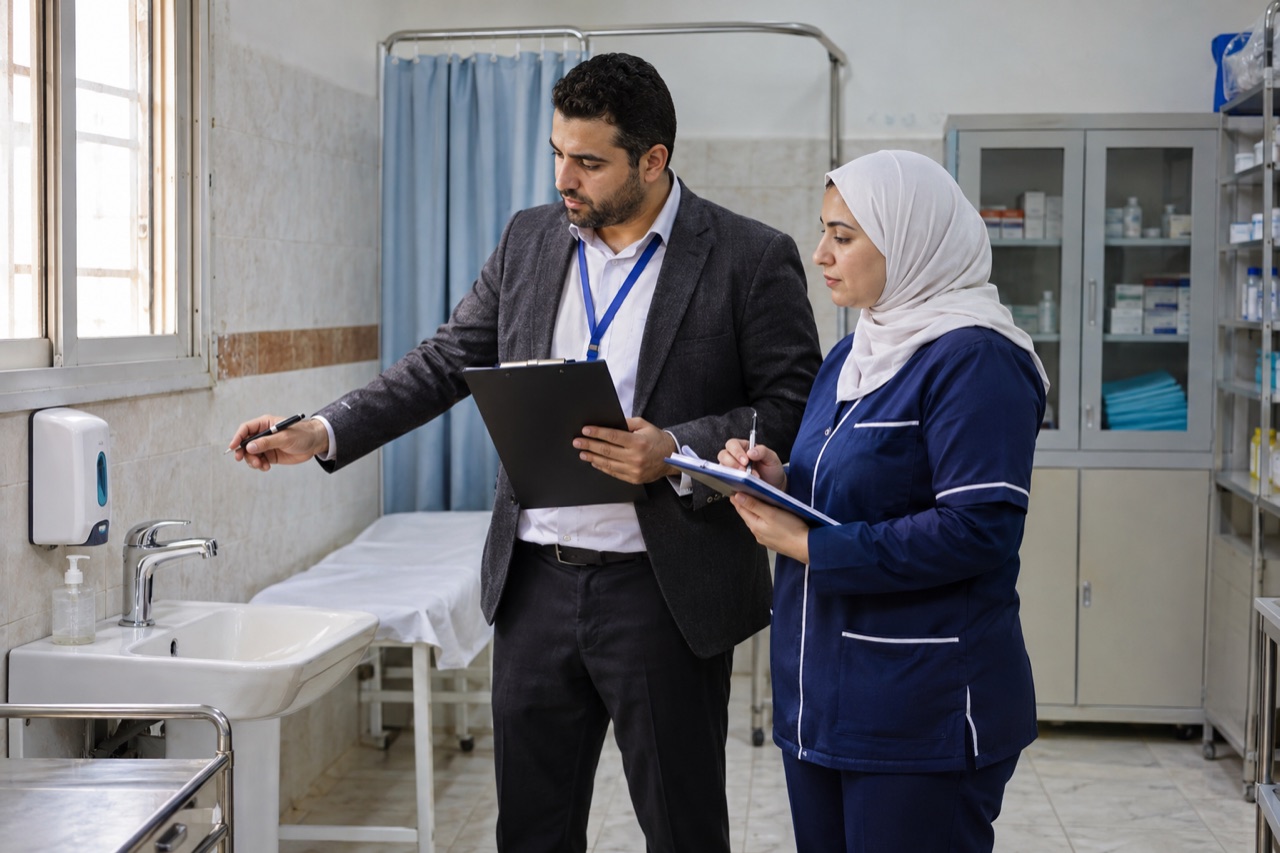
1. Confirm the applicable facility category
Begin with the actual licensed activity and the services you provide. GAHAR publishes separate standards for different facility types. Its 2026 ambulatory-care handbook includes a private-clinic annex. Confirm the applicable edition and pathway directly with the authority before building your preparation plan. A checklist for another facility category may send your team in the wrong direction. [1][2]
2. Define the starting position honestly
Suggested working method: create a gap register with the requirement, current practice, available evidence, missing work, owner and target date. Use “not checked” when a point has not been assessed; do not mark it complete because a document exists. Ask the reviewer to distinguish urgent safety issues from administrative improvements and items requiring an authority’s interpretation.
3. Connect procedures to real daily work
For each improvement, ask: who does it, when, where is it recorded and how is a missed step handled? Test a fictional patient journey with staff to find gaps. Use the resulting observations to improve the process. Avoid copying a large policy library that does not describe your clinic’s actual work; the proposed preparation plan should be manageable for your team.
4. Assign improvement work by competence
GAHAR’s handbook addresses areas including patient care, facility safety, infection prevention and information management. [2] Use appropriately qualified clinical, engineering, quality and information specialists for the work that needs their expertise. For your project plan, give each action one accountable owner and an escalation route; an administrative coordinator should not sign off technical matters beyond their competence.
5. Set milestones around evidence
An illustrative preparation sequence is assessment, agreed actions, implementation, staff practice and an internal readiness review. Set dates after assessing the gaps, not before. Keep a record of completed actions and remaining limitations. Distinguish provider fees from any applicable authority charges and from physical alterations or equipment costs. There is no universal completion time for every clinic.
6. Check what the support provider is promising
Ask for a written scope, named responsible specialists, the assessment method, exclusions, expected deliverables and how changes are priced. Ask what happens if additional work is identified. Preparation services, facility licensing and an accreditation decision are distinct matters. GAHAR is the relevant accreditation authority; a support provider cannot promise its decision. [1]
7. Send a preparation enquiry
In the Eyadtak service form, choose “Accreditation readiness (e.g. GAHAR)”. Provide the city, specialty, facility category if known, operating status and any previous assessment. Start with a summary, not identifiable patient files. The team can discuss availability and the appropriate scope. Do not describe your clinic as accredited unless you hold a valid decision covering the relevant facility and scope.
Sources and review method
Sources reviewed: 10 November 2026. General educational guidance for planning; adapt it to your specialty and applicable Egyptian requirements. Suggested examples and plans do not guarantee results.